Manila: Mount Pinatubo 4X4 & Hiking Trip
Transport includedMountain fees coveredLicensed guide
From $101 per person
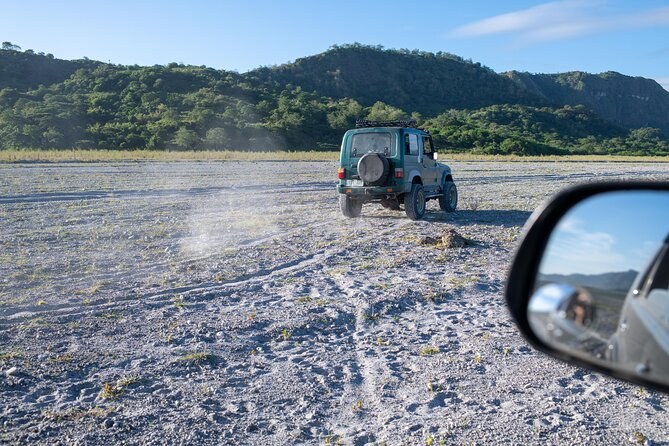
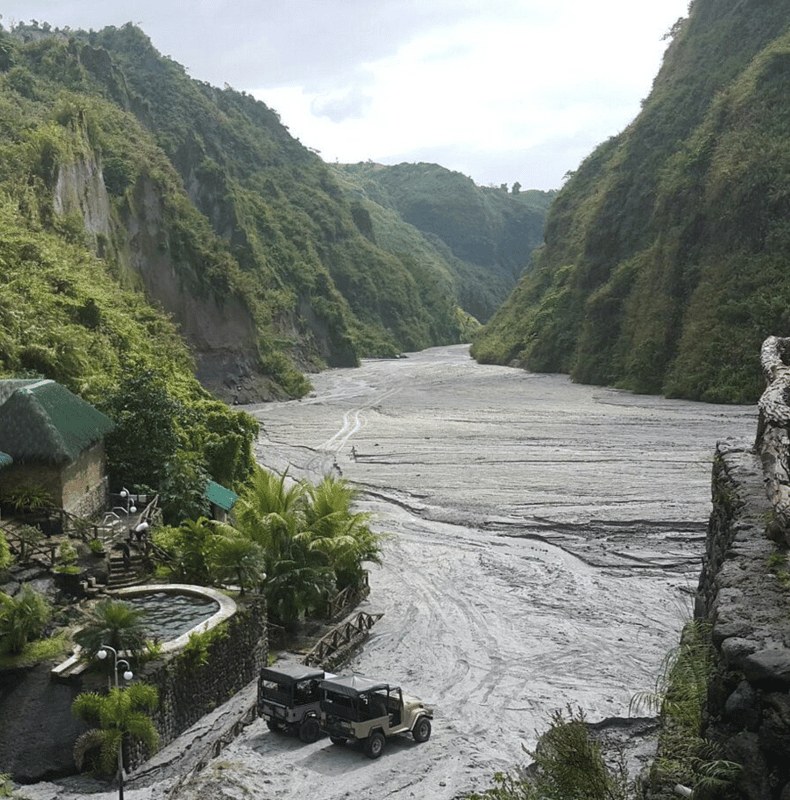
Weather does not make a Mount Pinatubo day uncomfortable. It decides whether the day happens. The approach crosses an open riverbed in a jeep and the walk crosses running water on foot, so the question is not how warm it will be — it is how much water is coming down the valley.
Three things change with the rain, in order of how much they matter. The riverbed crossings rise, which is what closes the trail; the jeeps stop lower down, which makes the walk longer; and the ash surface turns from dust to mud, which changes what you want on your feet. None of that is about comfort. A dry-season trek and a wet-season trek are two different lengths of day.
PAGASA puts the Philippine rainy season at June to November and the dry season at December to May, splitting the dry half into cool months to February and hot months from March. Every operator on this mountain works to that calendar, and the free-cancellation window on every tour here is the mechanism that makes a wet-season booking sensible rather than reckless. If you are choosing dates for a Mt Pinatubo day tour, choose them from the table below.
PAGASA 30-year climatological normals for Clark, Pampanga, the nearest station to the Capas jump-off. Annual total 2,026.8 mm.
| Month | Rainfall, Clark | Season | What it means on the trail |
|---|---|---|---|
| January | 17.4 mm | Dry, cool | Lowest water, longest jeep run, shortest walk |
| February | 18.6 mm | Dry, cool | As good as January; dust at its worst |
| March | 28.4 mm | Dry, hot | Firm ground, hard sun, no shade |
| April | 65.0 mm | Dry, hot | Still excellent; hottest stretch of the year |
| May | 221.8 mm | Dry, hot | Afternoon storms build; crossings start to matter |
| June | 241.2 mm | Rainy | Jeeps stop lower; the walk gets longer |
| July | 422.6 mm | Rainy | Cyclones cross Luzon; stand-downs common |
| August | 429.4 mm | Rainy | Wettest month; the riverbed can be impassable |
| September | 293.1 mm | Rainy | Greenest walls, least reliable access |
| October | 177.0 mm | Rainy, easing | High early, settling late |
| November | 78.0 mm | Dry, cool | Dry-season conditions, no crowds |
| December | 34.2 mm | Dry, cool | Reliable trail, holiday demand |
The driest month on Clark's record, and inside PAGASA's cool dry season of December to February. The riverbed is at its lowest, so the jeeps drive furthest up it and the walk at the end is the shortest it gets. This is peak season on the trail: book a week or two out.
Almost as dry as January and the last of the cool months. Firm ground and low water again, which is what makes the season. The trade-off is dust: the ash track is at its finest and driest, and it hangs behind the jeep in front. A buff or a light mask is worth more this month than a jacket.
PAGASA splits the dry season into a cool half and a hot half, and the hot half starts here. Rainfall is still negligible and the riverbed is still low. What changes is the sun on the ash flat, where there is no shade at any point. Start early and carry more water than you think you need.
Rain begins to register, though 65 mm across a month changes nothing on the trail. Nationally April and May are the hottest months of the year. Conditions on the mountain are still the best of the year and the trail is busy with them. Two litres of water per person is a floor here, not a target.
Almost eight times April, and the last month PAGASA counts as dry. Storms build in the afternoon rather than the morning, which is why the day starts before dawn. Treks run normally, but the water in the crossings starts to matter for the first time. Watch the forecast the day before rather than the week before.
The rainy season opens, and the anniversary of the 1991 eruption falls on the 15th. Crossings deepen and the jeeps stop lower down the riverbed. Expect the walk to run longer than the listings quote. Free cancellation to 24 hours before is the thing to check on any booking from here on.
Nearly double June, and the season when tropical cyclones cross Luzon. Stand-downs become common and they are the operator's call, made on the morning. Nothing about a July booking is wasted if it refunds. The upside is an empty trail and cloud sitting in the caldera.
The wettest month on the Clark record. On the western side of the range the figure is far higher: PAGASA's normal for Iba, in Zambales, is 897.7 mm in August alone. Treks stand down regularly and the riverbed can be impassable for days. If August is your only window, build a spare day into the plan.
Rain is easing but the typhoon season has not finished. The ash walls are at their greenest, which is the one real argument for coming now. Access is still unreliable and the crossings are still high. Treat a September date as provisional until the day before.
The turn. Rainfall drops about 40 per cent from September and the last cyclones of the year cross early in the month. The riverbed is still high in the first fortnight and settles through the second. From late October the trail becomes reliable again.
The rainy season closes. Ground firms, water falls, and the mornings turn cool again. Conditions are close to the dry-season standard without the dry-season crowds. For a first visit with any flexibility, this is the quiet month to aim at.
Dry and cool, and the trail is fully reliable again. Christmas and New Year fill the jeeps: this is a domestic holiday as well as a foreign one. Book earlier than you would in November. Mornings on the ash flat before sunrise are genuinely cold in an open jeep.
December to February. Dry and cool. The best conditions of the year
and the busiest trail. Book ahead.
March to May. Dry and hot. The ground is still perfect and the sun is the
problem instead of the water.
June to November. Rainy. Access is unreliable, the walk is longer and the
mountain is empty. Bookable, with a refundable ticket and a spare day.
If you can pick freely, take November or January: dry ground, cool mornings and a trail that is not full. If your dates are fixed in the wet half of the year, the rainy-season guide covers what actually changes and how to book around it.
There is only one, and it is why the tours leave Manila at midnight. Jeeps dispatch at first light because the ash flat is cool then, the light across the canyon walls is at its best, and the walk finishes before the middle of the day. By eleven in the morning the plain is glaring and shadeless. Nobody starts a Pinatubo trek in the afternoon, and no operator here offers one.
Not for rain alone, but for water in the riverbed, yes. The call is made by the operator on the morning, and every tour here refunds in full up to 24 hours before the start, so the thing to protect is your flexibility rather than the booking.
Yes, when you get there. The walls are green rather than grey and the trail is empty. The difficulty is that access is unreliable and the walk is longer, which is a planning problem rather than a scenery one.
Cold enough for a jacket in an open jeep before sunrise between December and February, when the national mean sits around 25.5 °C in January. By nine in the morning on the ash flat you will have taken it off.
The hazard is moving water rather than the gradient. Rain upstream raises the crossings quickly and that is precisely why the trail closes, so the guide's call is the one that counts. Read what the day involves before you book a wet-month date.
November, narrowly. It has dry-season ground, cool mornings and none of the January to April crowd. December and January are better conditions and busier; every departure is listed on Mount Pinatubo Tours.
From $101 per person
From $382 per person