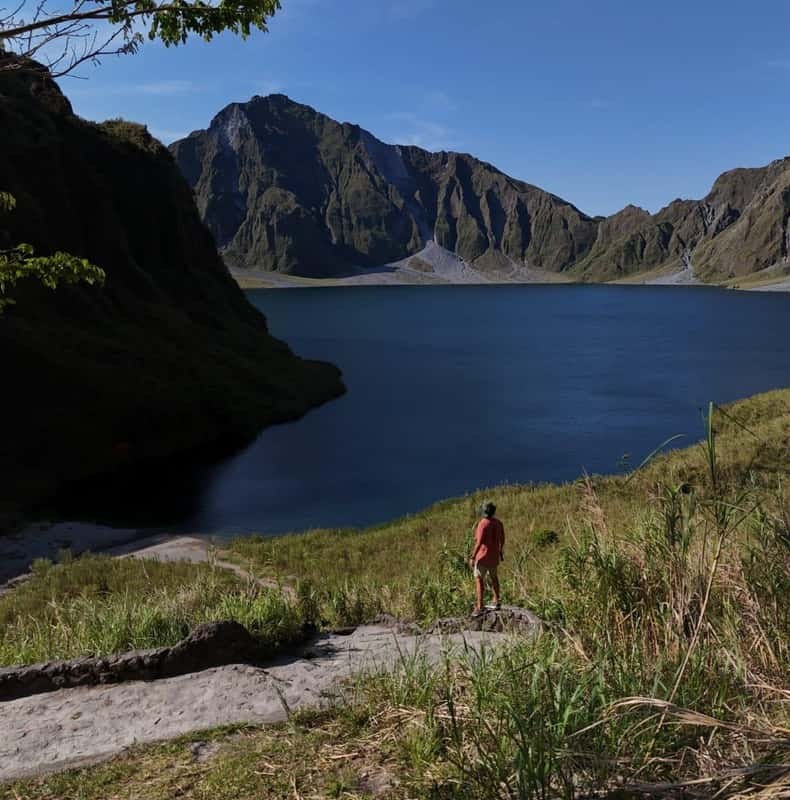
Mt.Pinatubo: Hike Day Hike only from MANILA PRIVATE TOUR
Private groupPickup includedMountain fees covered
From $382 per person
The listings rarely say which trail they use, and it decides your drive, your fees and how the day is timed. Here is the difference, from the itineraries the tours themselves publish.
If you are staying in Metro Manila and booking a shared day, you are going via Capas. If you have booked a private crater hike, check the itinerary, because it may load through Zambales instead. Both reach the same lake.
Two roads onto the same crater, from the itineraries the tours publish.
| Capas trail | Botolan trail | |
|---|---|---|
| Province | Tarlac | Zambales |
| Jump-off | Barangay Santa Juliana | Botolan, on the western side |
| Side of the mountain | East | West |
| From Metro Manila | About 3 hours | Longer, through Tarlac then Zambales |
| From Clark | About 1 hour | Further |
| Used by | The shared crater days | The private crater hike |
| Fees collected by | Capas local government | Botolan local government |
| 4x4 fleet | The largest on the mountain | Smaller |
| Best for | Anyone starting east of the range | Anyone already on the Zambales coast |
The established route, and the one most people mean when they say they have been to Pinatubo. The jump-off at Barangay Santa Juliana has the registration desk, the biggest 4x4 fleet and the homestays, and it sits closest to the expressway network that gets you there. The trail reopened on 23 June 2025 after a suspension over trail maintenance and ancestral-domain matters, and access now runs through operators accredited by the local government.
Its advantage is straightforward: it is the shortest run from Manila and from Clark, and its infrastructure is the most developed. Its disadvantage is the same thing. This is where the crowds are in January and April. Getting to the jump-off has the roads.
The western approach, from the side of the range that faces the South China Sea. The private crater hike listed here loads there: its published itinerary drives north through Tarlac, crosses into Zambales, and runs the 4x4 and the walk from the western valleys. The fees are set and collected by a different local authority, and the landscape on the way in is different — this is the side where the Toblerone Hills stand, and the listing stops at them.
Its advantage is that it is quieter, and that from anywhere on the Zambales coast it is much the nearer of the two. Its disadvantage is the drive from Manila, which is longer, and the smaller fleet.
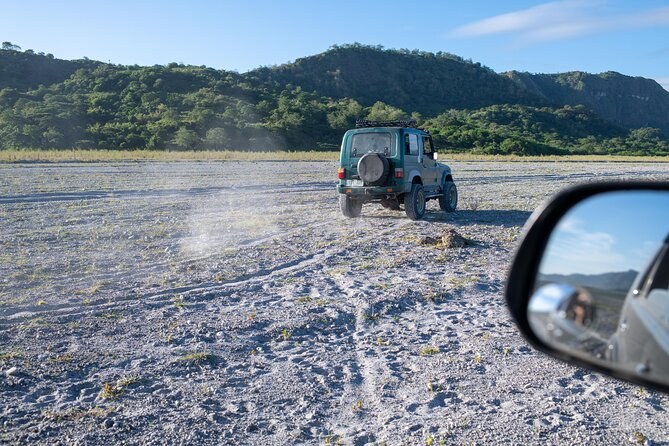
From Capas the drive ends in farmland at the eastern foot of the range, and the jeeps head west into a wide, open, pale valley with the mountains ahead of you the whole way. The riverbed is broad here and the 4x4 run is the longest on the mountain, which is why the Capas day is the one people describe as a jeep trip with a walk attached. The canyon narrows only in the last stretch before the trail.
From Botolan you come at the mountain from the sea side. The published itinerary on the private hike moves north through Tarlac, crosses into Zambales, takes breakfast and a safety briefing before the vehicles change, and then runs a shorter 4x4 stretch into tighter country. It is the side where the Toblerone Hills stand — steep, evenly spaced ridges cut out of ash by successive wet seasons, and a standard photo stop on that listing.
Start with the itinerary rather than the title. Tour listings name their stops, and the province is usually in there: a day that mentions Camp Kainomayan, Santa Juliana or Capas is on the eastern trail, and one that names Botolan or moves through Zambales is on the western one. If the itinerary is vague, the meeting time is a second clue. A midnight departure from Makati is almost always the Capas run, because that is the timing the eastern jeep dispatch needs.
The third clue is the fee wording. Listings that itemise an environmental fee, an entrance fee and a conservation fee separately are usually paying more than one authority, which points west. It is worth thirty seconds of checking, because the answer changes your drive by an hour or more and decides whether a Clark hotel is useful to you. Getting to the jump-off has the road times for both.
Not much, and that is worth saying, because people assume the quieter trail must be cheaper. It is not. Both approaches charge a 4x4 shared between up to five people, a guide fee per group and per-person conservation charges collected in cash at registration, and the amounts are set by whichever local authority runs that side of the mountain. Neither publishes a schedule anywhere reliable, which is why this site quotes the structure rather than a figure.
What does move the total is the tour you book on top of it. A shared seat on the Capas run is the cheapest way onto this mountain by a wide margin, because the van, the jeep and the guide are all split between a full party. A private day on either trail costs several times that per person and buys you collection from your own address, your own vehicle and your own pace. That decision has nothing to do with which trail you use, and it is worth keeping the two separate when you compare listings.
Operators have announced an alternative approach from the Clark side, at Inararo, used when the main trails close. None of the days listed here uses it, so it is worth knowing about rather than planning around.
Choose the trail that fits where you are sleeping, because everything else about the two is close enough not to matter. From Manila, Makati or Clark, take a Capas departure: it is shorter, better supplied and cheaper. From the Zambales coast, or if you want the Toblerone Hills and a quieter jeep park, Botolan earns the extra driving. Either way the walk is the same length and the lake is the same lake. Mount Pinatubo trekking tour departures on both trails are listed together, and what the day involves applies to both.
Pick the trail that suits where you are sleeping, and the rest looks after itself. Every departure is on Mount Pinatubo Tours.
From $382 per person
From $101 per person